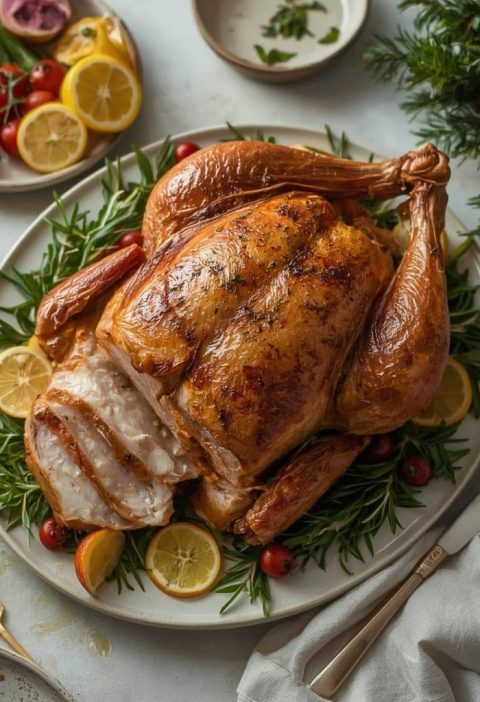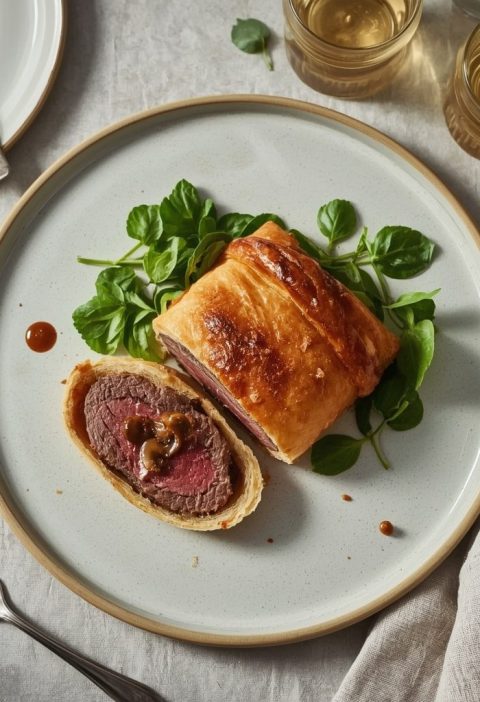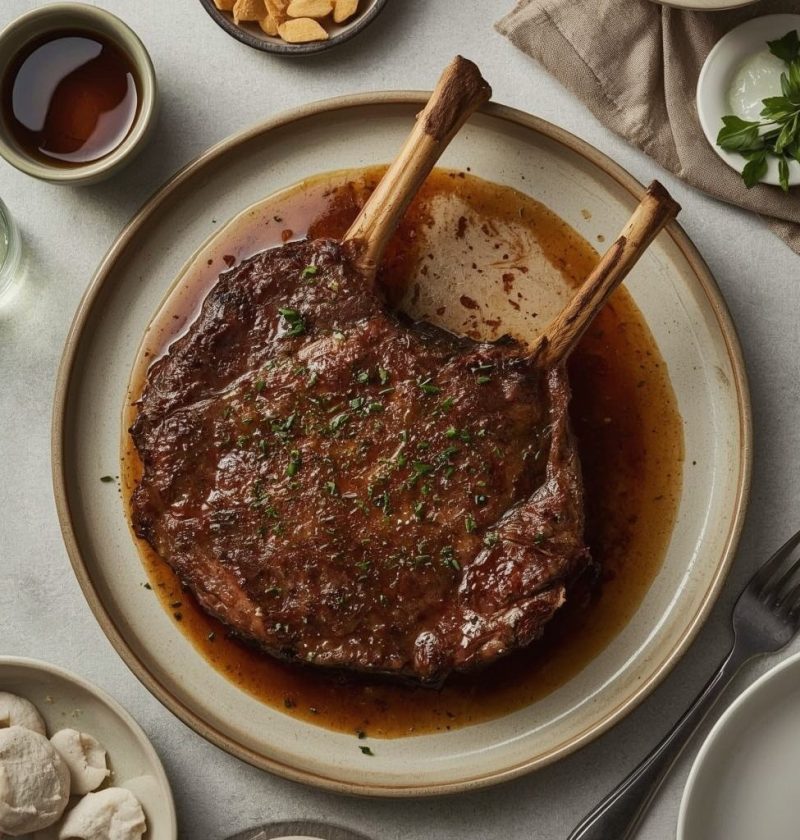
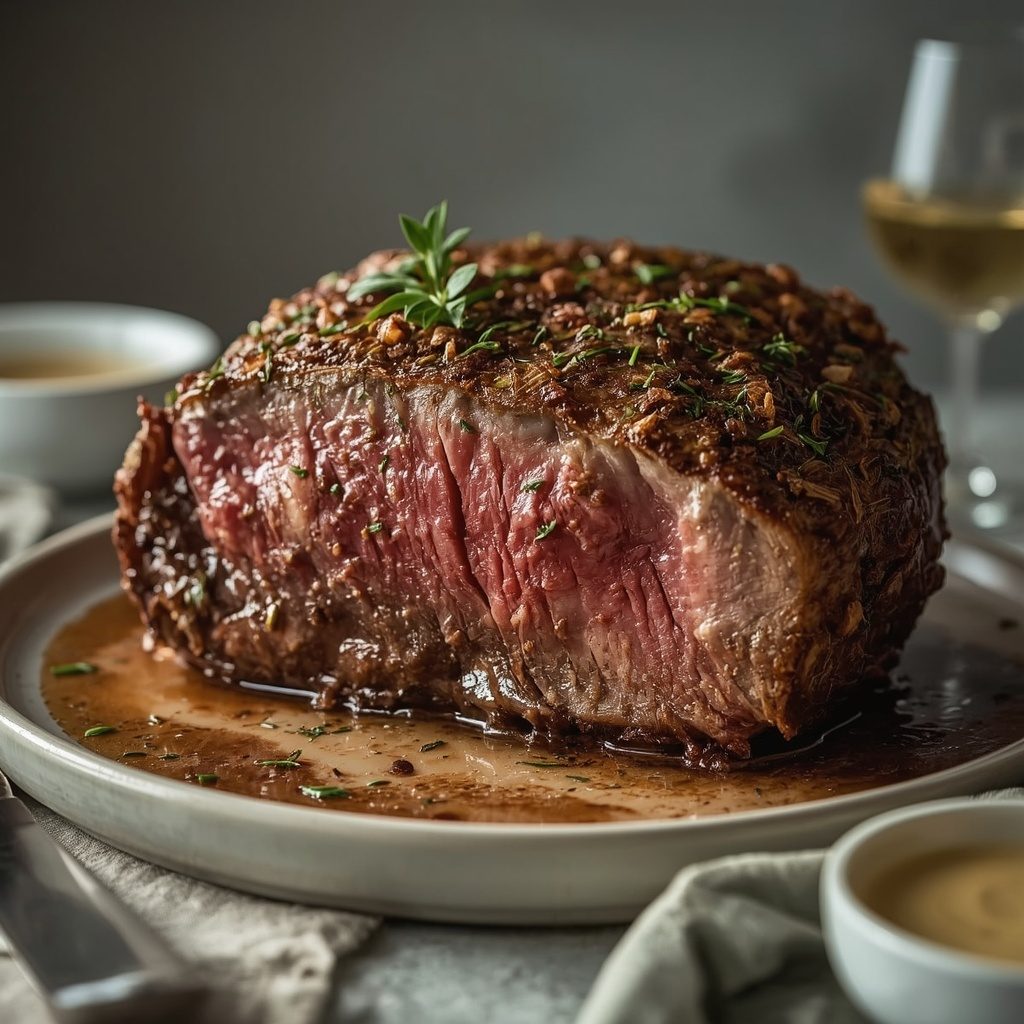
Gordon Ramsay prime rib is a bone-in roast with a garlic-herb crust and a deep, savory jus, and this version is inspired by his style. The meat comes out evenly pink from edge to center, with a browned, crisp exterior and a flavor that’s rich but not heavy. Slow roasting does most of the work, so you get a tender, juicy slice without much fuss.
From start to finish, it takes about 170 minutes, with just 20 minutes of that hands-on. That makes it a great fit for a holiday table, a weekend dinner or a potluck centerpiece. It looks impressive on the board, yet the method is simple enough for a first-time roaster.
What Is Gordon Ramsay Prime Rib?
Prime rib is a bone-in rib roast cut from the upper rib section of the steer. It’s prized for its marbling and mild, beefy flavor, and it’s usually roasted whole and carved at the table. Restaurants often serve it for special occasions, but home cooks can make it just as well.
What makes this version special is the two-stage roast: a low oven for an even center, then a hot blast for color. A paste of garlic, thyme and rosemary goes on before roasting, and the vegetables under the rack catch the drippings for the jus.
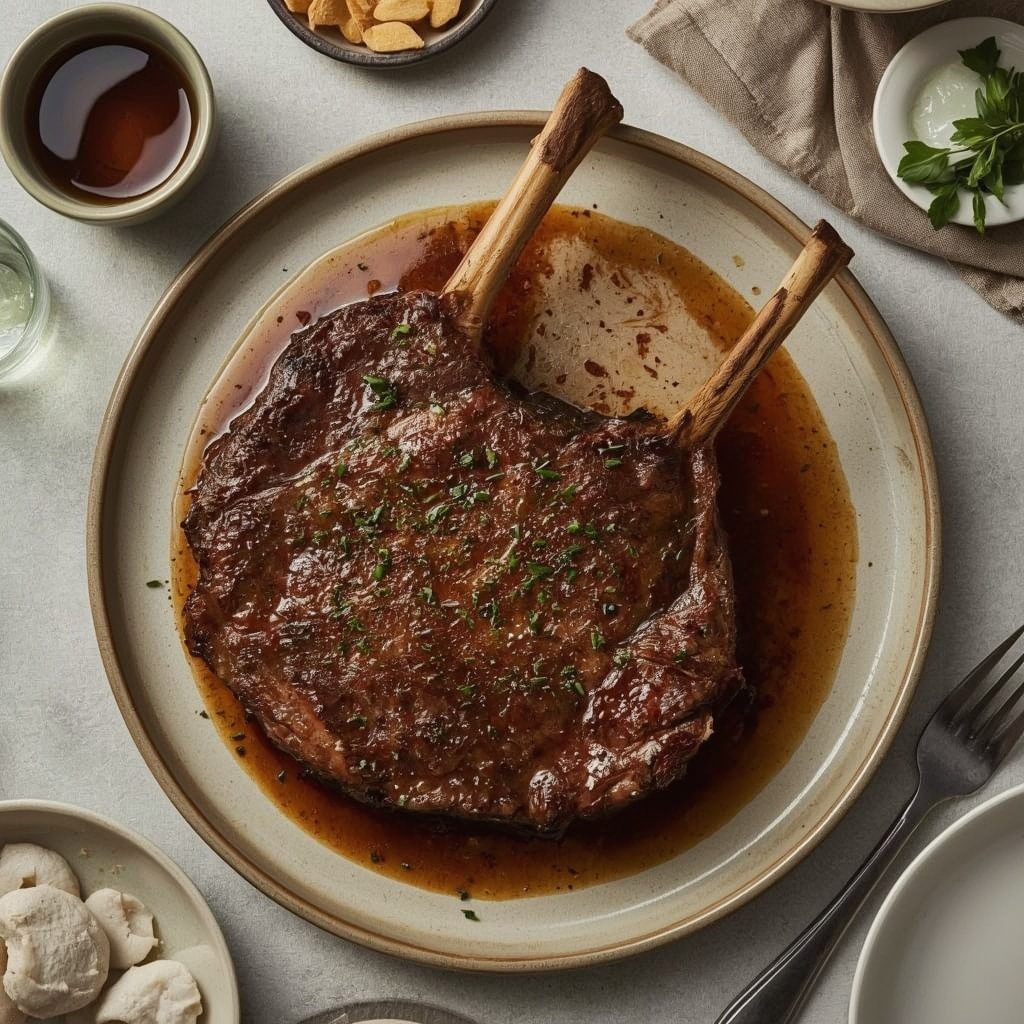
Gather These Fresh Ingredients for Gordon Ramsay Prime Rib
This roast comes together with a short list of ingredients, most of which you likely already have in the pantry.
The Roast
- 1 (7-pound / 3.2kg) bone-in prime rib roast — ask the butcher to trim the fat cap to 1/4 inch so the crust sets instead of pooling.
The Herb Paste
- 2 tablespoons (30ml) olive oil — helps the paste cling and encourages browning.
- 6 cloves garlic — finely minced so no large pieces burn during the hot finish.
- 2 tablespoons fresh thyme leaves — chopped; dried thyme works in a pinch, use half the amount.
- 2 tablespoons fresh rosemary — finely chopped so the needles don’t stay tough.
Seasonings
- 2 tablespoons kosher salt (Diamond Crystal) — plus more to taste; use less if you only have fine table salt.
- 2 teaspoons freshly ground black pepper
For the Pan and Jus
- 2 large yellow onions — quartered; they flavor the jus and keep the roast off the pan bottom.
- 4 medium carrots — cut into 2-inch chunks.
- 4 stalks celery — cut into 2-inch chunks.
- 1 cup (240ml) beef broth — plus more as needed if the pan dries out.
- 1 tablespoon all-purpose flour — thickens the jus just enough to coat a spoon.
Useful Equipment
You don’t need much beyond basic kitchen gear, but a couple of tools make this roast much easier to nail.
- Instant-read thermometer — the only reliable way to check doneness without cutting into the roast.
- Large roasting pan — or a 9×13-inch (23x33cm) pan deep enough to hold the vegetables and broth.
- Roasting rack — keeps the roast above the juices; a wire cooling rack set inside the pan works too.
- Fine-mesh sieve — strains the jus smooth before it goes to the table.
- Carving board — one with a groove catches the juices so your counter stays clean.
- Small bowl — for mixing the herb paste before rubbing it on the meat.
Detailed Step-by-Step Instructions to Make Gordon Ramsay Prime Rib
Step 1: Temper the Roast and Preheat
Pat the prime rib dry with paper towels and let it sit at room temperature for 1 hour before cooking. This helps the roast cook evenly; a cold roast will have an overcooked exterior by the time the center is done. Position a rack in the lower third of the oven and preheat to 250°F (120°C).
Step 2: Build the Herb Paste
In a small bowl, mix the olive oil, garlic, thyme, rosemary, 1 tablespoon of the kosher salt and the black pepper into a paste. Rub the paste all over the roast, pressing it into the surface. Season the entire roast with the remaining 1 tablespoon salt.
Step 3: Set Up the Pan
Scatter the onions, carrots and celery in the bottom of a large roasting pan, or a 9×13-inch (23x33cm) pan. Set a roasting rack over the vegetables and place the roast on the rack, fat side up. Pour the beef broth into the pan.
Step 4: Roast Low and Slow
Roast uncovered for about 2 hours, until the internal temperature reaches 110°F (43°C) for rare or 120°F (49°C) for medium-rare. Do not rely on time alone; use an instant-read thermometer inserted into the center without touching bone. If the pan juices dry out, add a splash more broth.
Step 5: Blast the Crust
Increase the oven temperature to 500°F (260°C) and roast for 10 to 15 minutes more, until the crust is deeply browned and the internal temperature reaches 120°F (49°C) for rare or 130°F (54°C) for medium-rare. Watch closely to prevent the crust from burning.
Step 6: Rest the Roast
Transfer the roast to a carving board and tent loosely with foil. Let it rest for at least 20 minutes and up to 30 minutes. The temperature will rise 5 to 10°F as it rests, and the juices will redistribute so the meat stays juicy. The final temperature should be 125°F (52°C) for rare or 135°F (57°C) for medium-rare.
Step 7: Start the Jus
While the roast rests, make the jus. Set the roasting pan over medium heat on the stovetop. Sprinkle the flour over the vegetables and pan juices and cook, stirring, for 1 minute to remove the raw flour taste.
Step 8: Finish and Strain the Jus
Pour in 1 cup (240ml) beef broth and scrape up any browned bits from the bottom of the pan. Simmer for 5 to 8 minutes, until the jus thickens slightly. Season with salt and pepper to taste, then strain through a fine-mesh sieve into a warm gravy boat, discarding the vegetables.
Step 9: Carve and Serve
Carve the prime rib by slicing between the bones to remove them, then slice the meat across the grain into 1/2-inch-thick slices. Serve immediately with the jus alongside.
Common Mistakes and How I Fixed Them
I once pulled a roast straight from the fridge and into the oven, and the outside was gray and dry before the middle was anywhere near pink. Since then, I treat the tempering hour and the resting time as part of the cooking, not optional extras.
- Skipping the rest — slicing too soon lets the juices run onto the board; give it the full 20 to 30 minutes under foil.
- Trusting the timer — ovens run hot or cold, so check with a thermometer and start testing early rather than late.
- Overcrowded pan — too many vegetables steam the drippings; keep them in a single layer so they brown and flavor the jus.
- Under-salting the crust — a big roast needs the full amount of salt; season the day before if you can for deeper flavor.
What Pairs Perfectly with Prime Rib
- Creamy mashed potatoes — a soft, buttery base that soaks up every drop of the jus.
- Crisp green salad — a sharp vinaigrette cuts through the richness of the beef.
- Roasted root vegetables — carrots and parsnips caramelize while the oven is already hot.
- Crusty bread — warm slices are perfect for mopping the plate clean.
- Sparkling water with lemon — a bright, simple pour that keeps the focus on the meat.
Pro Tips for Making Prime Rib
- Buy bone-in — bones insulate the meat and add flavor, and the roast looks impressive on the board.
- Dry the surface — moisture is the enemy of a good crust, so pat the roast thoroughly before rubbing.
- Season early — salting up to 24 hours ahead lets the salt penetrate and season the meat all the way through.
- Watch the blast — the 500°F (260°C) finish is quick, so stay by the oven the whole time.
- Warm the platter — a hot serving plate keeps slices from cooling too fast at the table.
- Slice thin — 1/2-inch slices carve cleanly and stay tender on the plate.
- Save the bones — they make a rich broth for the next batch of jus.
Inspiring Variations of Prime Rib
- Smoky paprika rub — swap 1 teaspoon of the black pepper for smoked paprika for a subtle campfire note.
- Horseradish cream — stir 2 tablespoons prepared horseradish into 1/2 cup sour cream for a sharp sauce.
- Rich tomato au jus — add 1 teaspoon tomato paste to the pan for extra depth.
- Lemon-herb crust — add the zest of 1 lemon to the paste for a brighter, lighter flavor.
- Peppercorn finish — crack an extra teaspoon of black pepper over the crust just before the hot blast.
How to Store Prime Rib Properly
- Cool completely — let slices come to room temperature within 2 hours before storing to keep them safe.
- Fridge storage — keep leftovers in an airtight container for up to 4 days.
- Freezer method — wrap slices tightly in foil, place in a freezer bag and freeze for up to 3 months.
- Thaw overnight — move frozen slices to the refrigerator and let them thaw slowly before reheating.
Smart Reheating Tips for Prime Rib
- Low oven — warm slices gently at 300°F (150°C) for 15 to 20 minutes so they stay pink in the center.
- Hot skillet — sear individual slices for 1 to 2 minutes per side for a crisp edge.
- Warm jus — a quick dip in simmering jus heats the meat without drying it out.
Nutritional Value
These values are estimates per serving and will vary with the cut and portion size.
| Nutrient | Amount |
|---|---|
| Calories | 605 kcal |
| Protein | 46g |
| Carbs | 4g |
| Fat | 44g |
| Fiber | 1g |
| Sodium | 750mg |
FAQs
Can I make this Gordon Ramsay prime rib recipe ahead?
Yes. Season the roast up to 24 hours in advance and refrigerate it uncovered, then let it stand at room temperature for 1 hour before roasting. The jus can also be made up to 2 days ahead and reheated over low heat.
Why is my prime rib dry?
Usually it’s overcooked or sliced too early. Use a thermometer and pull the roast at 110°F (43°C) to 120°F (49°C) before the final blast, then rest it for the full 20 to 30 minutes.
Can I use a boneless roast instead?
Yes, but it cooks faster, so start checking the temperature about 30 minutes earlier. Tie it with kitchen twine at 2-inch intervals so it holds a even shape while roasting.
How do I know when it’s medium-rare?
The final temperature after resting should read 135°F (57°C) in the center. The meat will feel springy, and the juices should run pink when you carve.
What if I don’t have fresh herbs?
Dried thyme and rosemary work fine; use about half the amount since dried herbs are more concentrated. Add them to the paste and rub as usual.
PrintGordon Ramsay-Inspired Prime Rib
A show-stopping prime rib inspired by Gordon Ramsay’s style, with a garlic-herb crust and a rich, savory jus. The beef is roasted low and slow for an evenly pink center, then finished with a blast of heat for a beautifully browned exterior. It’s simpler than it looks and perfect for a special occasion.
- Prep Time: 20
- Cook Time: 150
- Total Time: 170
- Yield: 8 1x
- Category: Dinner
- Method: Roasting
- Cuisine: American
Ingredients
- 1 (7-pound / 3.2kg) bone-in prime rib roast, fat cap trimmed to 1/4 inch
- 2 tablespoons (30ml) olive oil
- 6 cloves garlic, finely minced
- 2 tablespoons fresh thyme leaves, chopped
- 2 tablespoons fresh rosemary, finely chopped
- 2 tablespoons kosher salt (Diamond Crystal), plus more to taste
- 2 teaspoons freshly ground black pepper
- 2 large yellow onions, quartered
- 4 medium carrots, cut into 2-inch chunks
- 4 stalks celery, cut into 2-inch chunks
- 1 cup (240ml) beef broth, plus more as needed
- 1 tablespoon all-purpose flour
Instructions
- Pat the prime rib dry with paper towels and let it sit at room temperature for 1 hour before cooking. This helps the roast cook evenly; a cold roast will have an overcooked exterior by the time the center is done. Position a rack in the lower third of the oven and preheat to 250°F (120°C).
- In a small bowl, mix the olive oil, garlic, thyme, rosemary, 1 tablespoon of the kosher salt, and the black pepper into a paste. Rub the paste all over the roast, pressing it into the surface. Season the entire roast with the remaining 1 tablespoon salt.
- Scatter the onions, carrots, and celery in the bottom of a large roasting pan (or a 9×13-inch / 23x33cm pan). Set a roasting rack over the vegetables and place the roast on the rack, fat side up. Pour the beef broth into the pan.
- Roast uncovered for about 2 hours, until the internal temperature reaches 110°F (43°C) for rare or 120°F (49°C) for medium-rare. Do not rely on time alone; use an instant-read thermometer inserted into the center without touching bone. If the pan juices dry out, add a splash more broth.
- Increase the oven temperature to 500°F (260°C) and roast for 10 to 15 minutes more, until the crust is deeply browned and the internal temperature reaches 120°F (49°C) for rare or 130°F (54°C) for medium-rare. Watch closely to prevent the crust from burning.
- Transfer the roast to a carving board and tent loosely with foil. Let it rest for at least 20 minutes and up to 30 minutes. The temperature will rise 5 to 10°F as it rests, and the juices will redistribute so the meat stays juicy. The final temperature should be 125°F (52°C) for rare or 135°F (57°C) for medium-rare.
- While the roast rests, make the jus. Set the roasting pan over medium heat on the stovetop. Sprinkle the flour over the vegetables and pan juices and cook, stirring, for 1 minute to remove the raw flour taste.
- Pour in 1 cup (240ml) beef broth and scrape up any browned bits from the bottom of the pan. Simmer for 5 to 8 minutes, until the jus thickens slightly. Season with salt and pepper to taste, then strain through a fine-mesh sieve into a warm gravy boat, discarding the vegetables.
- Carve the prime rib by slicing between the bones to remove them, then slice the meat across the grain into 1/2-inch-thick slices. Serve immediately with the jus alongside.
Notes
Store leftover prime rib in an airtight container in the refrigerator for up to 4 days. To freeze, wrap slices tightly in foil and place in a freezer bag for up to 3 months; thaw overnight in the refrigerator. Reheat gently in a 300°F (150°C) oven for 15 to 20 minutes, until warmed through but still pink in the center, or sear slices in a hot skillet for 1 to 2 minutes per side. The jus can be made up to 2 days ahead and reheated over low heat. For make-ahead, season the roast up to 24 hours in advance and refrigerate uncovered; let it stand at room temperature for 1 hour before roasting.
Nutrition
- Calories: 605
- Sugar: 2g
- Sodium: 750mg
- Saturated Fat: 18g
- Carbohydrates: 4g
- Fiber: 1g
- Protein: 46g
- Cholesterol: 130mg
Keywords: Gordon Ramsay prime rib, prime rib recipe, standing rib roast, garlic herb prime rib, roast beef, holiday dinner, Christmas prime rib, low and slow prime rib, beef roast, special occasion