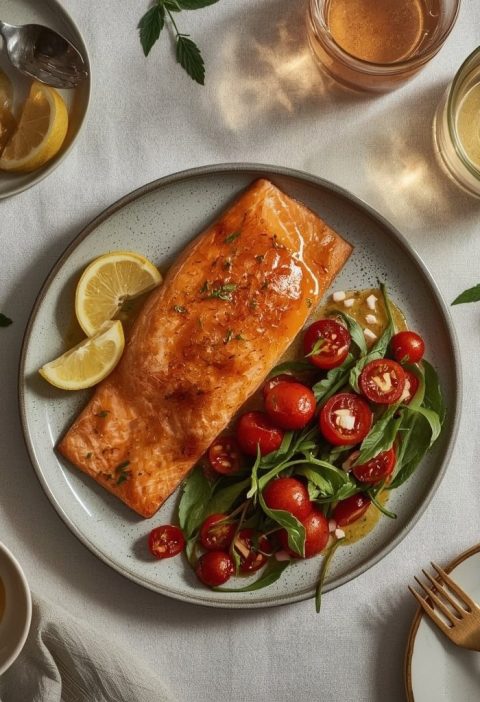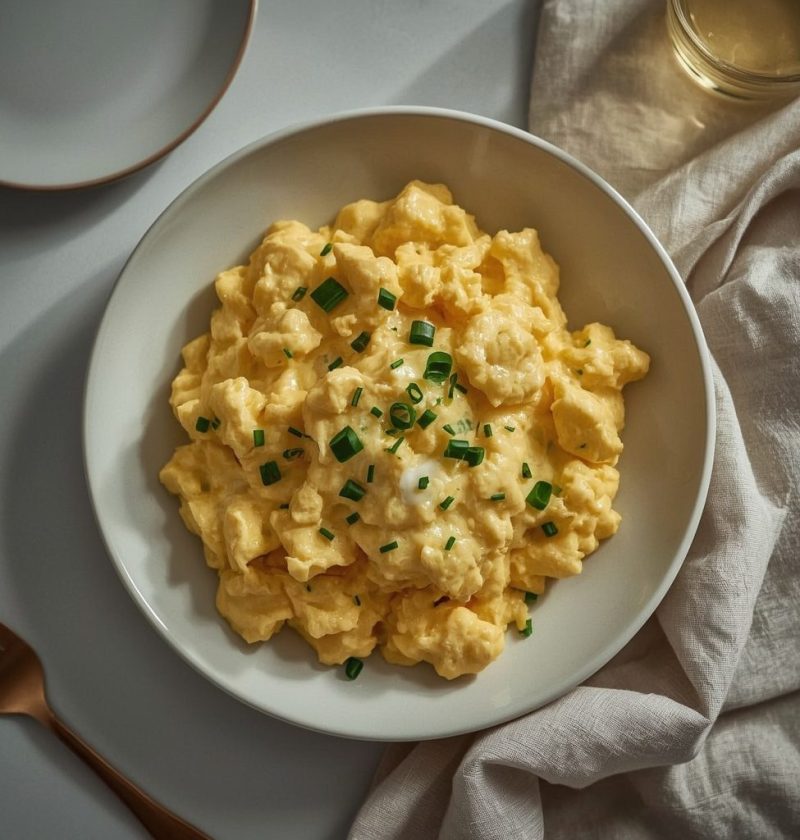
Gordon Ramsay scrambled eggs are the soft, custardy kind you get from a restaurant brunch, not the dry curds that bounce off a plate. This version is inspired by Gordon Ramsay’s style: low heat, constant stirring, a knob of butter and crème fraîche folded in at the end. The result is glossy, silky eggs with a mild tang and a shower of fresh chives. A pinch of salt and a few grinds of pepper let the eggs speak for themselves.
From crack to plate, the whole thing takes about 15 minutes, and most of that is standing at the stove. It’s easy enough for a weekday morning but special enough for a holiday breakfast, a potluck brunch or a lazy Sunday when you want something warm and quick.
What Is Gordon Ramsay Scrambled Eggs?
They’re softly cooked scrambled eggs built on a classic French technique: gentle heat, steady stirring and finishing with cold butter and a little crème fraîche. That final addition cools the pan slightly and stops the eggs from overcooking while it makes them richer.
What makes this version stand out is the patience. You keep the heat low, stir in slow circles, and pull the pan off the burner while the eggs still look a touch underdone. A spoonful of crème fraîche and fresh chives finish the plate.
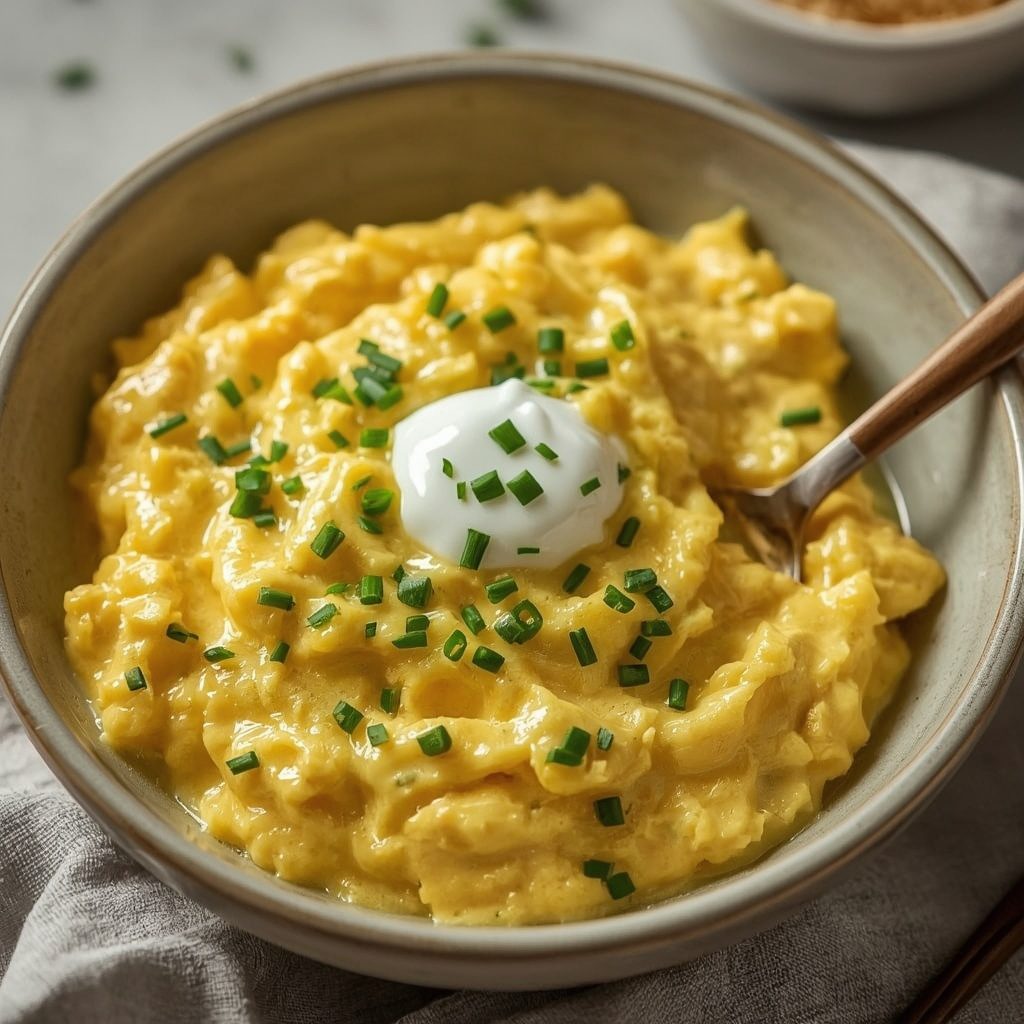
Gather These Fresh Ingredients for Gordon Ramsay Scrambled Eggs
Six simple ingredients, most of them already in your fridge, make this breakfast.
Main Ingredients
- 6 large eggs — the freshest you can find give the best color and flavor.
- 2 tbsp (28g) unsalted butter, divided — unsalted lets you control the seasoning; keep the last half tablespoon for the finish.
- 2 tbsp (30g) crème fraîche — full-fat sour cream works as a swap if you can’t find it.
Spices and Seasonings
- 1/4 tsp kosher salt — add it to the raw eggs so it seasons every curd.
- 1/8 tsp freshly ground black pepper — a few grinds from a mill taste best.
For the Topping
- 1 tbsp (3g) fresh chives, finely chopped — snip them with kitchen scissors so they stay delicate.
Useful Equipment
You don’t need much, but the right pan and spatula make a real difference.
- Nonstick skillet — a 10-inch (25cm) pan keeps the eggs moving without sticking.
- Silicone spatula — a flexible one scrapes the bottom and sides clean as you stir.
- Mixing bowl — medium size, big enough to whisk six eggs without splashing.
- Fork or whisk — a fork is enough for a smooth, uniform mix.
- Warm plates — pop them in a low oven so the eggs stay hot at the table.
Detailed Step-by-Step Instructions to Make Gordon Ramsay Scrambled Eggs
Step 1: Whisk the Eggs Smooth
Crack the 6 large eggs into a medium bowl and add the 1/4 tsp kosher salt and 1/8 tsp black pepper. Whisk vigorously with a fork or whisk until completely smooth and uniform in color, about 30 seconds. Stop there; overbeating whips in too much air and can make the curds spongy.
Step 2: Melt the Butter Gently
Set a 10-inch (25cm) nonstick skillet over low heat and add 1 1/2 tablespoons (21g) of the butter, swirling to coat the bottom evenly. It should melt slowly without sizzling or browning. If it starts to foam and turn brown at the edges, pull the pan off the heat for a moment, because the pan is too hot.
Step 3: Add the Eggs and Stir Constantly
Pour the eggs into the skillet and let them sit undisturbed for 20 to 30 seconds. Then begin stirring constantly with a silicone spatula, scraping the bottom and sides of the pan. Keep the heat low the whole time; high heat is the most common mistake and makes the eggs rubbery and dry.
Step 4: Fold Slow, Steady Curds
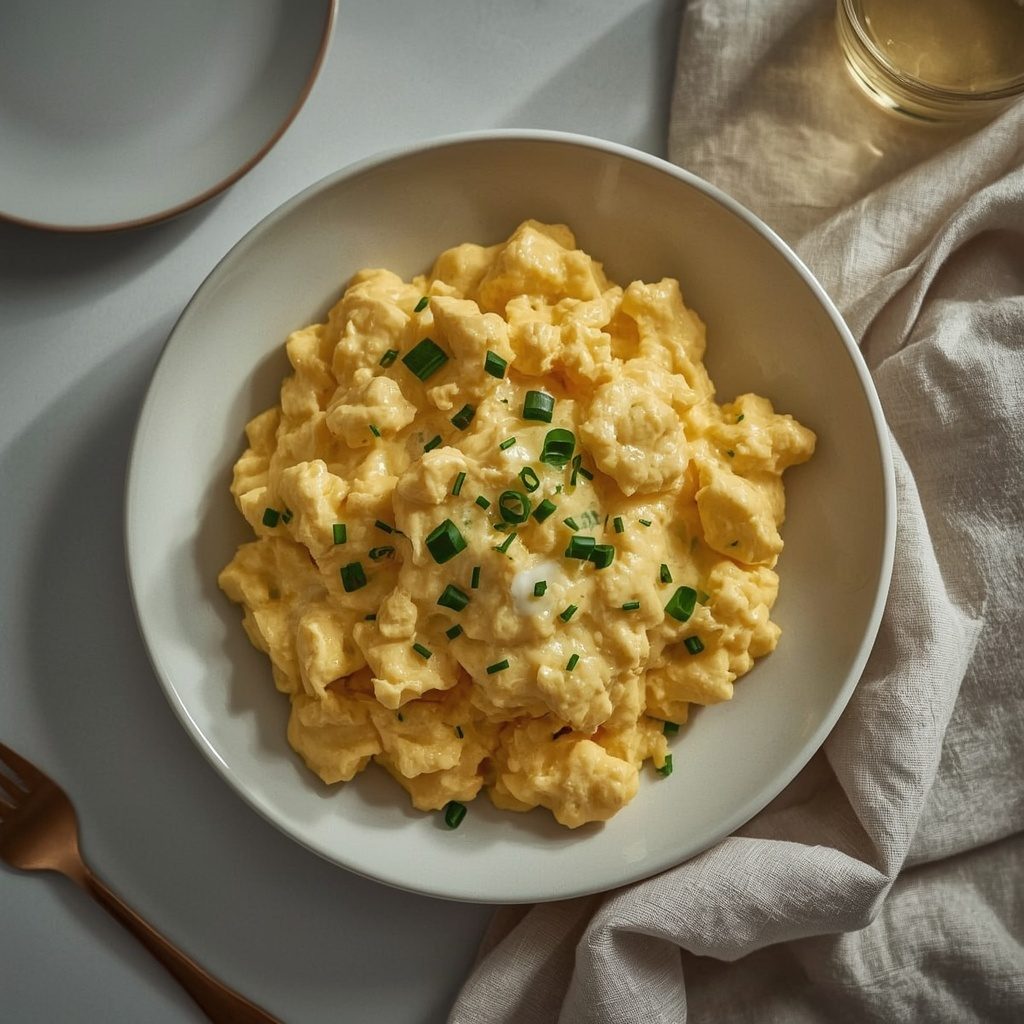
Keep stirring in slow, steady circles, moving the spatula around the pan and folding the eggs over themselves. After 3 to 4 minutes, the eggs thicken into soft, small curds and look glossy and slightly wet. Think of it like folding batter: gentle motion, no rushing.
Step 5: Pull the Pan Off the Heat
When the eggs are just set but still creamy and custardy, about 1 to 2 minutes more, remove the skillet from the heat. They should look slightly underdone. Egg dishes are done when the eggs reach 160°F (71°C) and no longer run wet, but remember they keep cooking from residual heat once the pan leaves the burner.
Step 6: Finish with Butter and Crème Fraîche
Add the remaining 1/2 tablespoon (7g) butter and the 2 tablespoons (30g) crème fraîche to the hot eggs. Stir until melted and incorporated, so the eggs look silky and hold soft folds.
Step 7: Fold In the Chives
Fold in the 1 tablespoon (3g) chopped chives, saving a small pinch for garnish if you like. Taste and adjust salt and pepper, keeping in mind the cheese and butter are already seasoned.
Step 8: Serve Right Away
Spoon the eggs onto warm plates and top with the reserved chives. They’re best eaten right away, while still hot and soft, so don’t wait for the toast to finish.
Common Mistakes and How I Fixed Them
The first time I tried these, I had the burner cranked to medium-high and answered a text mid-stir. By the time I looked back, the eggs had set into tough, squeaky curds. Now I keep the heat low and stay at the stove for the full ten minutes.
- Heat set too high — the eggs seize and turn rubbery within seconds, so start low and stay low from the first stir to the last.
- Overcooking in the pan — waiting until the eggs look fully done leaves them dry, so remove the skillet while they still look glossy and a little wet.
- Beating the eggs too long — a quick 30-second whisk is plenty, because overwhipping adds air and makes the curds spongy.
- Skipping the cold finish — the butter and crème fraîche cool the eggs and stop the cooking, so don’t leave them out.
What Pairs Perfectly with Scrambled Eggs
- Toasted sourdough — thick slices give you something sturdy to scoop the soft eggs onto.
- Roasted tomatoes — halved plum tomatoes blistered in a hot oven add a bright, juicy contrast.
- Simple green salad — a handful of dressed leaves cuts through the richness of the butter and crème fraîche.
- Crisp beef strips — a few strips of browned beef sausage or smoked beef add a savory side.
- Fresh orange juice — a cold glass of juice balances the warm, buttery plate nicely.
Pro Tips for Making Scrambled Eggs
- Choose a heavy pan — a thick-bottomed skillet spreads the heat evenly and prevents hot spots that cook the eggs unevenly.
- Preheat on low — let the pan warm for a minute before the butter goes in, so it melts without browning.
- Stir with patience — slow, sweeping circles keep the curds small and creamy.
- Season the raw eggs — salting before cooking seasons every bite evenly.
- Warm the plates — cold plates cool the eggs fast and make them set.
- Serve in minutes — these eggs don’t hold well, so call everyone to the table before you plate.
- Cook in batches — for a crowd, make two smaller pans rather than one crowded skillet.
Inspiring Variations of Scrambled Eggs
- Cheesy upgrade — stir in 1/4 cup (25g) grated sharp cheddar with the crème fraîche for a richer finish.
- Smoky spice — add a pinch of smoked paprika to the raw eggs for a warm, savory note.
- Herb swap — replace the chives with 1 tablespoon finely chopped fresh dill or parsley.
- Extra butter finish — use a full tablespoon (14g) of cold butter at the end for an even silkier texture.
- Lighter version — swap the crème fraîche for 2 tablespoons (30g) plain Greek yogurt for a tangy, leaner plate.
How to Store Scrambled Eggs Properly
- Cool them fast — spread the eggs on a plate to cool within an hour before storing.
- Fridge storage — keep them in an airtight container in the refrigerator for up to 1 day.
- Skip the freezer — scrambled eggs turn watery and grainy when frozen, so don’t bother.
- Reheat from cold — warm leftovers gently from fridge temperature rather than leaving them out on the counter.
Smart Reheating Tips for Scrambled Eggs
- Gentle skillet method — warm in a nonstick skillet over low heat with a splash of milk or water, stirring until just warmed through.
- Microwave shortcut — heat in 15-second bursts on medium power, stirring between each, until hot.
- Watch the texture — stop the moment they’re hot, or they’ll tighten and turn rubbery.
- Check the center — reheat until it reaches 165°F (74°C) in the center for safety.
Nutritional Value
These values are estimates per serving, based on two servings.
| Nutrient | Amount |
|---|---|
| Calories | 330 kcal |
| Protein | 18g |
| Carbs | 2g |
| Fat | 27g |
| Fiber | 0g |
| Sodium | 420mg |
FAQs
Can I make this Gordon Ramsay scrambled eggs recipe ahead?
You can whisk the eggs with the salt and pepper up to 2 hours in advance and refrigerate them in a covered bowl. Melt the butter and cook just before serving, since the eggs are at their best fresh from the pan.
Can I use milk instead of crème fraîche?
Yes, a splash of whole milk or heavy cream will loosen the eggs, though you lose the tang. For the closest match, use full-fat sour cream in the same amount.
How do I know when the eggs are done?
They’re ready when they form soft, glossy curds and still look a little wet, then you pull the pan off the heat. They continue cooking from residual heat and firm up on the plate.
Why did my eggs turn out dry and rubbery?
Almost always too much heat or too long in the pan, so keep the burner low and stir constantly. Pulling the skillet off the heat while the eggs look slightly underdone fixes both problems.
Can I double the recipe for a crowd?
You can, but cook in two batches in the same 10-inch (25cm) skillet rather than doubling up in one pan. A crowded pan holds too much heat and the eggs cook unevenly and turn dry.
PrintGordon Ramsay-Inspired Scrambled Eggs

These are custardy, soft scrambled eggs inspired by Gordon Ramsay’s style, made with butter, chives, and a touch of crème fraîche for a silky finish. The eggs are cooked low and slow, stirred constantly, and pulled off the heat while still glossy so they stay tender. A pinch of kosher salt and a few grinds of black pepper are all you need.
- Prep Time: 5
- Cook Time: 10
- Total Time: 15
- Yield: 2 1x
- Category: Breakfast
- Method: Stovetop
- Cuisine: American
Ingredients
- 6 large eggs
- 2 tbsp (28g) unsalted butter, divided
- 1/4 tsp kosher salt
- 1/8 tsp freshly ground black pepper
- 2 tbsp (30g) crème fraîche
- 1 tbsp (3g) fresh chives, finely chopped
Instructions
- Crack the eggs into a medium bowl and add the kosher salt and black pepper. Whisk vigorously with a fork or whisk until the eggs are completely smooth and uniform in color, about 30 seconds; do not overbeat.
- Melt 1 1/2 tablespoons (21g) of the butter in a 10-inch (25cm) nonstick skillet over low heat, swirling to coat the bottom evenly. The butter should melt slowly without sizzling or browning; if it starts to foam and brown, the pan is too hot.
- Pour the eggs into the skillet and let them sit undisturbed for 20 to 30 seconds, then begin stirring constantly with a silicone spatula, scraping the bottom and sides of the pan. Keep the heat low the entire time; high heat is the most common mistake and will make the eggs rubbery and dry.
- Continue stirring in slow, steady circles, moving the spatula around the pan and folding the eggs over themselves. After 3 to 4 minutes, the eggs will thicken into soft, small curds and look glossy and slightly wet.
- When the eggs are just set but still creamy and custardy, about 1 to 2 minutes more, remove the skillet from the heat. The eggs should look slightly underdone; they will continue to cook from residual heat.
- Add the remaining 1/2 tablespoon (7g) butter and the crème fraîche to the hot eggs and stir until melted and incorporated. The eggs should look silky and hold soft folds.
- Fold in the chopped chives, reserving a small pinch for garnish if desired. Taste and adjust salt and pepper if needed.
- Serve immediately on warm plates, topped with the reserved chives. The eggs are best eaten right away, while still hot and soft.
Notes
Scrambled eggs are best served immediately. Leftovers can be stored in an airtight container in the refrigerator for up to 1 day; reheat gently in a nonstick skillet over low heat with a splash of milk or water, stirring until just warmed through. Do not freeze. To make ahead, whisk the eggs with the salt and pepper up to 2 hours in advance and refrigerate; melt the butter and cook just before serving.
Nutrition
- Calories: 330
- Sugar: 1g
- Sodium: 420mg
- Saturated Fat: 13g
- Carbohydrates: 2g
- Fiber: 0g
- Protein: 18g
- Cholesterol: 525mg
Keywords: Gordon Ramsay scrambled eggs, creamy scrambled eggs, soft scrambled eggs, chives, crème fraîche, butter, breakfast, low and slow eggs, custardy eggs, easy breakfast